
For years, if someone asked me which hotel loyalty program was the best value in the points space, the answer was easy: World of Hyatt. No question. Simple award chart, predictable pricing, a rock-solid transfer partnership with Chase Ultimate Rewards or Bilt Points, and enough aspirational properties to keep any traveler dreaming. It was the program that made even casual points collectors feel like pros.
That era is ending.
In 2026, Hyatt has shifted the entire landscape of its loyalty program, and frankly, the points community is still processing the damage. This isn’t just a minor category shuffle. Between a dramatic overhaul of the award chart and a wave of hotel category changes, we are looking at potential cost increases of up to 67% on some redemptions. If you have Hyatt points sitting in your account right now, you need to read this.
Disclosure: I am not affiliated with Hyatt. I did not receive any monetary or other incentives from them. My opinions are solely my own
What Has Actually Changed
Let’s start with the biggest move: the award chart restructure.
For as long as most of us have been in the points game, World of Hyatt ran a clean, easy-to-understand system. Eight hotel categories, three pricing tiers within each one (off-peak, standard, and peak), and published rates that told you exactly what a night would cost. Simple. Honest. Powerful.
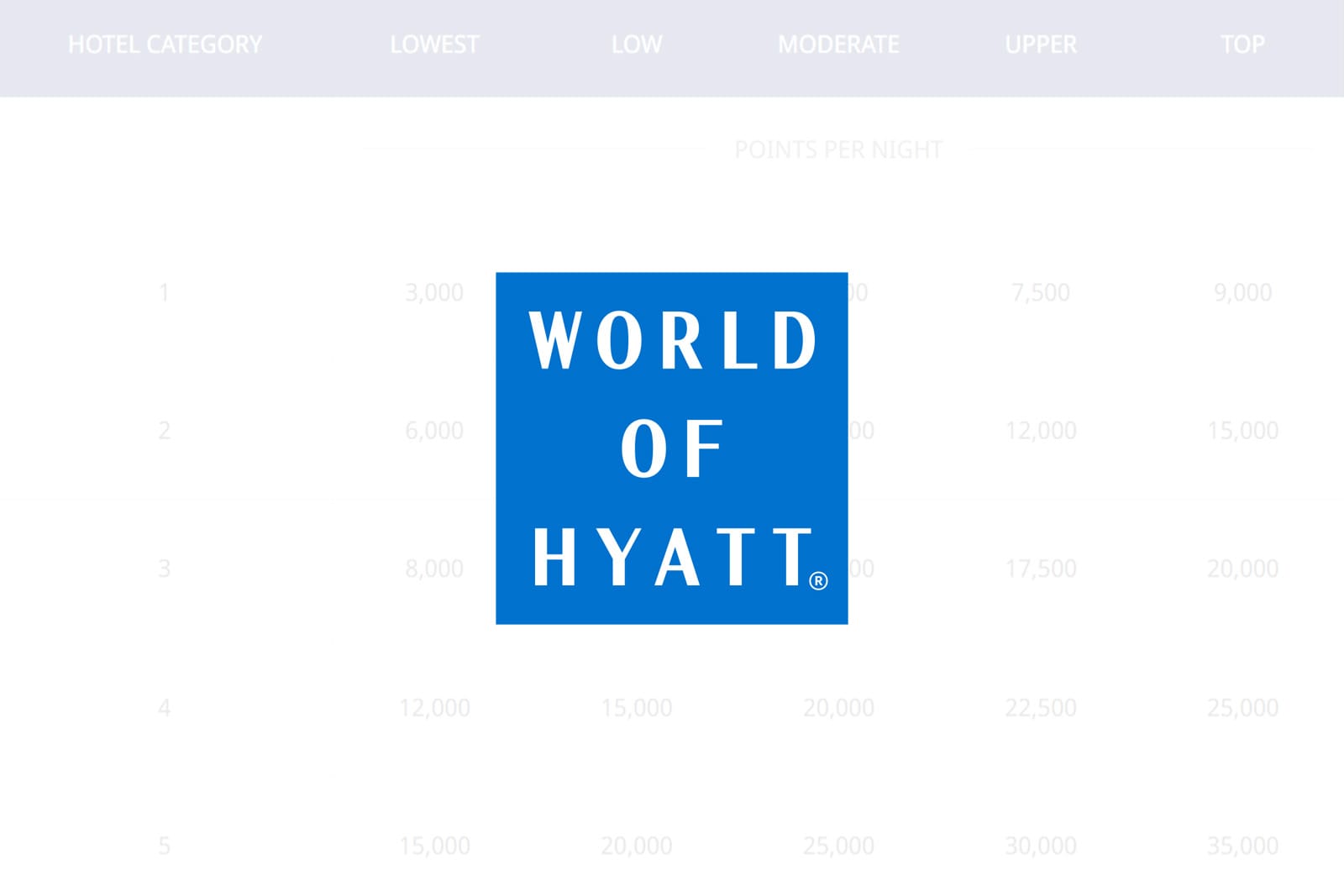
Starting May 20, 2026, that system expands from three tiers to five: Lowest, Low, Moderate, Upper, and Top. Multiply five tiers by eight categories, then factor in separate charts for suites, club-level access, Miraval resorts, and all-inclusive properties, and you are suddenly looking at well over 350 distinct pricing combinations across the program. The math that used to take seconds now requires a spreadsheet.


Here is what the numbers look like in practice. A Category 4 property, previously one of the most accessible and popular redemption sweet spots, topped out at around 18,000 points per night at peak. Under the new Top tier, that same category now reaches 25,000 points per night, a 39% jump. At Category 8, the ceiling rises even higher, with the most expensive redemptions climbing by as much as 67% compared to current peak pricing.
On top of that, Hyatt also announced that 136 hotel properties are changing categories on the same date. Some properties are moving down (a win for bargain hunters), but many are moving up, meaning the points required just to access them are increasing before the new pricing tiers even come into play. In major cities like Los Angeles, Denver, Orlando, Miami, Fort Lauderdale, and Seattle, several well-loved properties are jumping up a category, effectively pricing them out of the popular Category 1-4 free night certificate range.
To add fuel to the fire, Hyatt has confirmed there is no requirement that properties offering Top-tier pricing must offset those dates with an equal number of Lowest-tier nights. In practice, that means a hotel could theoretically price every single night at the Top rate and never offer the cheaper tiers at all.
Why Hyatt Is Doing This
Let’s be honest about what is happening here, even if Hyatt’s official language calls it a “thoughtful update” designed to “reinforce long-term stability.”
This is pseudo-dynamic pricing. Hyatt is not going full Marriott or Hilton, where pricing is essentially a black box. They are keeping the award chart, which deserves credit. But what they are doing is creating enough flexibility within the chart to respond to demand at the property level without triggering the annual category change process. It is a smart business move in an increasingly uncertain world.
Think about it from their perspective. Hotel real estate and operating costs are rising. Leisure travel demand, particularly for premium properties, remains strong coming out of a few volatile years. A rigid three-tier system was limiting their ability to adapt pricing at high-demand properties, especially around events, peak holidays, or simply at resorts where the cash rate has shot through the roof. The five-tier structure gives them levers they did not have before.
The rollout strategy is telling too. Hyatt has said that in 2026, only a limited number of properties will move nights into the Upper and Top categories, with “broader adoption in the years that follow.” Read between the lines: this year is the soft launch. The full impact will be felt in 2027 and beyond. Programs that introduce demand-sensitive pricing mechanisms tend to use them more aggressively over time, not less.
Is World of Hyatt Still a Good Value?
Right now, the honest answer is: it depends, and we do not have the full picture yet.
The May 20th date is the real line in the sand. Until we see how widely Hyatt deploys the Upper and Top tiers across the portfolio in real-world bookings, it is impossible to say definitively how much damage has been done to the average redemption value. Hyatt has signaled restraint in 2026. Whether that promise holds through 2027 and 2028 is a different story.
What is already clear, though, is that World of Hyatt has lost its status as the automatic, no-brainer transfer destination for flexible points currencies. For years, the advice was simple: if you have Chase Ultimate Rewards, transfer to Hyatt. The math was easy, the value was consistent, and the award chart was transparent enough that even newer points collectors could navigate it with confidence.
That simple math is gone. The calculation now requires knowing which pricing tier a property is using on your specific travel dates, whether those dates fall into a high-demand window, and how the new category changes have affected your target hotel. For experienced optimizers, this is manageable but annoying. For newer travelers just getting into points, it adds a layer of complexity that will likely push some of them toward cash bookings or simpler programs.
There is also a ripple effect on the two ecosystems most closely tied to Hyatt: Chase and Bilt. The Hyatt transfer partnership has long been described as the crown jewel of Chase Ultimate Rewards, the main reason many travelers prioritized earning in that ecosystem above all others. Bilt Rewards, which also transfers to Hyatt at 1:1 and has been aggressively marketed around that partnership, faces the same problem. Both connections still exist and still transfer at 1:1, but the value on the other end is now less predictable. The calculus for whether to prioritize Chase or Bilt over Amex or Capital One just got more complicated for anyone who leaned into either program specifically for the Hyatt angle.
What I Would Do Right Now
If you take nothing else from this article, take this: book your planned Hyatt stays before May 20th. Any reservation made before that date locks in the current award chart. Once you cross that threshold, you are playing by the new rules.
If you have been eyeing a Category 7 or Category 8 property, a Park Hyatt, an Alila, an Andaz resort, anywhere aspirational, move now. Those are exactly the properties where Top-tier pricing will show up first and hit hardest. Category 8 properties could reach 75,000 points per night under the new system, compared to 40,000 points at standard pricing today.
Beyond the immediate booking window, here is how I am thinking about points strategy going forward:
Hold flexible points currencies. The more flexible your points, the better positioned you are to adapt as programs change. Chase Ultimate Rewards, Amex Membership Rewards, Capital One Miles, and Bilt Rewards all transfer to multiple airline and hotel partners, giving you options when one program shifts. Parking all your points in a single hotel currency, any hotel currency, is a risk you should avoid.
Do not abandon Hyatt entirely. The Lowest and Low tiers actually bring prices below current off-peak rates for certain categories. If you are flexible on travel dates and willing to hunt for those windows, there will still be strong value to be found. The program still has a published award chart, which puts it well ahead of Marriott and Hilton on transparency. Free Night Certificates from the World of Hyatt Credit Card also remain valid for any standard room within their applicable category, regardless of pricing tier, which is a meaningful protection for cardholders.
Diversify your hotel strategy. Hyatt should no longer be your only hotel play. Consider the value of earning IHG points for Kimpton and InterContinental properties, or building Marriott Bonvoy points for properties where Hyatt simply does not have a footprint.
The Bottom Line
World of Hyatt is not dead. But it is no longer the simple, obvious answer it once was.
The five-tier award chart is Hyatt’s attempt to buy themselves flexibility in a market that demands it. On paper, it is a reasonable business decision. In practice, for anyone who has built a points strategy around the predictability of that three-tier chart, it stings.
The changes rolling out on May 20th are just the beginning. Hyatt has been explicit that this framework will expand in the years ahead. The real question is not whether World of Hyatt is still worth engaging with today. It clearly is, especially if you act before the deadline. The bigger question is whether Hyatt’s relatively small global footprint, compared to Marriott or Hilton, can justify the complexity this new system introduces for its loyal members.
When the simplicity advantage disappears, the footprint gap becomes a much harder problem to ignore.
Book what you have planned. Stay flexible. Watch closely after May 20th. That’s the play.
Have Hyatt points burning a hole in your account? Drop your target property in the comments and let’s figure out if it’s worth booking now.
Leave a Reply