
Update 2026-01-21: Bilt has released details about what you can use Bilt Cash for in 2026. I have had to rewrite significant portions of this due to new info. I hope this is the last time I have to update this article
Update 2026-01-17: Bilt has heard the feedback and has come out with an update on the card https://newsroom.biltrewards.com/biltcardupdate. Article has been updated to reflect the change
The official details for Bilt 2.0 are here and the rumors were tragically accurate! The days of earning points without a transaction fee are over, regardless of which card you choose. The days of earning 1x point on rent with just 4 additional transactions are over. Below is my deep dive analysis on Bilt 2.0, weighing whether it’s still a worthwhile option or if it is time to cut ties.
Disclosure: I am not affiliated with Bilt, Chase, Citi or Capital One. I did not receive any monetary or other incentives from them. My opinions are solely based on my personal experience. Information compiled on January 14th, 2026. Please independently verify details as they are subject to change.
Three Tiers, New Rules: A Closer Look
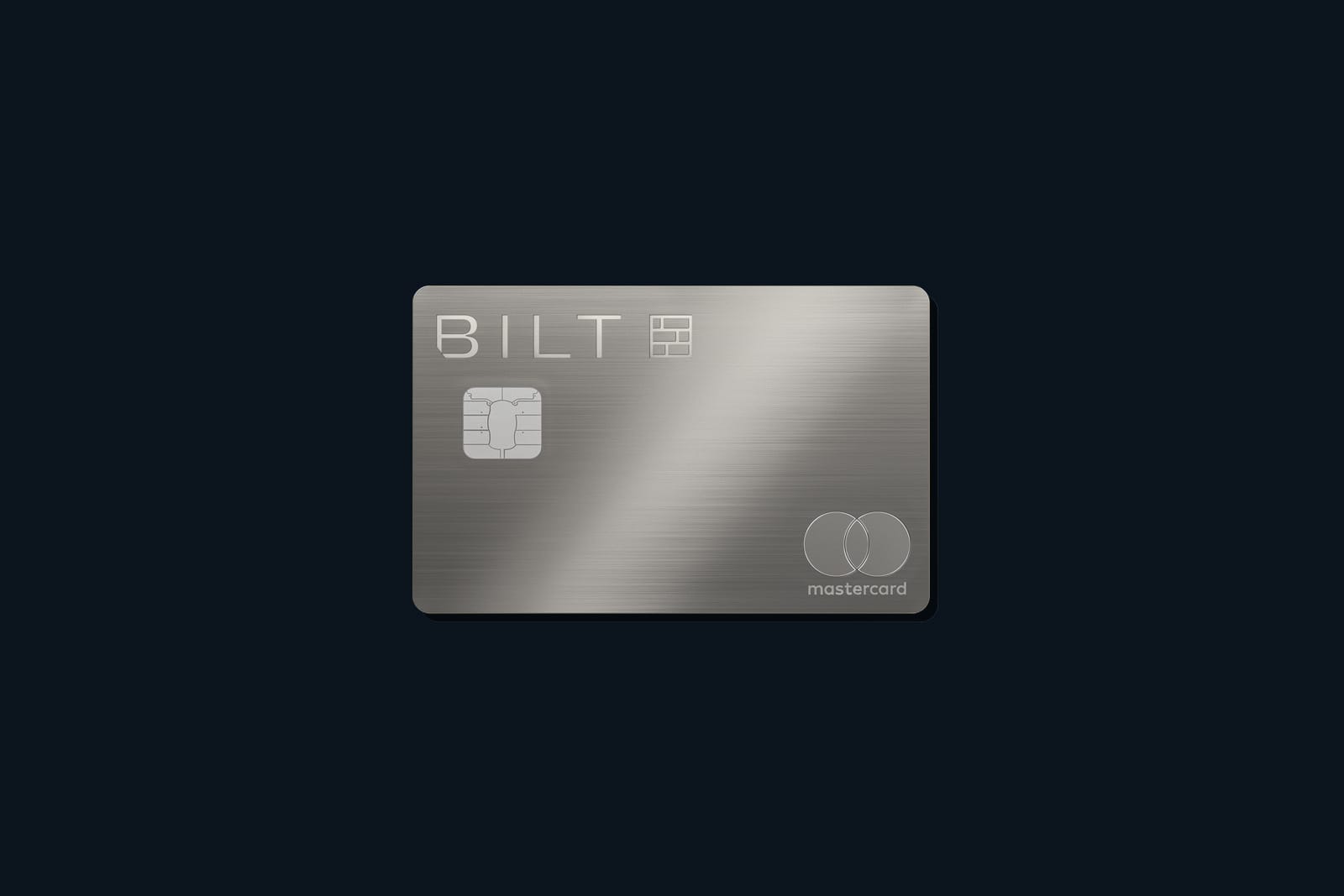
Bilt 2.0 offers three cards: one without and two with annual fees ($95 and $495). The core change? You now get two options that would determine how many points you earn from rent.
Option 1
You earn points based on your non-rent/mortgage spend on the card. The points are split into a tier system starting with 0.5x points when you spend at least 25% of your rent on non-rent/mortgage spend. All the way up to 1.25x points when you spend 100% or more of your rent.
| Points on Housing | Minimum everyday spend as a % of monthly rent / mortgage (Example of $2,000 rent) |
| 0.5x points | Spend at least 25% of monthly rent ($500) |
| 0.75x points | Spend at least 50% of monthly rent ($1,000) |
| 1x points | Spend at least 75% of monthly rent ($1,500) |
| 1.25x points | Spend the same or more as your monthly rent ($2,000) |
Option 2
You earn 4% back in Bilt Cash on everyday purchases, in addition to base points. You then use as little or as much of your Bilt Cash to increase the total points you earn on housing that month For every $30 in Bilt Cash earned, you can unlock 1,000 Bilt Points. There is no limit towards how much Bilt Cash can be transferred to Bilt points.
Card Breakdown:
Bilt Blue Card ($0 Annual Fee)
- Earning Power:
- 1x points on everyday spend
- 4% back in Bilt Cash on everyday spend excluding rent/mortgage
- Signup Bonus: $100 in Bilt Cash
- Additional Benefits: No foreign transaction fees
Bilt Obsidian Card ($95 Annual Fee, $50 Authorized User)
- Earning Power:
- 3x points on dining or groceries up to $25,000 per calendar year
- 2x points on travel
- 1x points on all other spending
- 4% back in Bilt Cash on everyday spend excluding rent/mortgage
- Annual Perks:
- $100 in Bilt Travel Hotel credits (given $50 bi-annually and requires a two night stay)
- Signup Bonus: $200 in Bilt Cash
- Additional Benefits: Trip Delay Insurance, no foreign transaction fees
Bilt Palladium Card ($495 Annual Fee, $95 Authorized User)
- Earning Power:
- 2x points on everyday spending on non-rent/mortgage
- 4% back in Bilt Cash on everyday spend excluding rent/mortgage
- Annual Perks:
- $400 for Bilt Travel Hotel credits (given $200 bi-annually and requires a two night stay)
- $200 Bilt Cash
- Signup Bonus:
- Limited-time 50,000 Bilt points
- Bilt Gold Status for a year after spending $4,000 in the first 3 months on non-rent/mortgage spend
- $300 Bilt Cash
- Additional Benefits: Priority Pass, purchase protection, no foreign transaction fees, extended warranty, and price drop protection.
Important Note: Information compiled from Bilt’s website on January 14th, 2026. Please independently verify details as they are subject to change.
Bilt Cash
On Jan 21st 2026, we got details on what exactly we can use Bilt Cash on. You can think of this as Bilt’s version of the coupon book, where earned Bilt Cash can be used to spend on the following things:
Dining and Groceries
$120 / year towards grocery or restaurant delivery (fulfilled via GrubHub)
- Redeem toward restaurant and grocery delivery fulfilled by GrubHub; $10 credit each month; Available 3/1/26
$60 / year of credits for Bilt 15-minute home delivery
- Redeem Bilt Cash toward Bilt’s ultra-fast Home Delivery orders on groceries, alcohol, and essentials, powered by Gopuff; $5 credit each month
$100 / year toward Gopuff FAM (Free delivery and discounted groceries)
- Cover your Gopuff FAM membership for up to twelve months; up to $100 annually; redeemable for monthly or annual membership; Available 3/1/26
$300 / year of restaurant credit at select Bilt Dining partners
- Use Bilt Cash toward meals at select Bilt partner restaurants via Mobile Dining Checkout; one visit per month up to $25; rollout expanding to thousands of restaurants nationwide throughout this year
$600 / year toward dining experience bookings
- Redeem Bilt Cash to book exclusive Bilt dining experiences; up to $50 per month; Available 3/1/26
Cardholder Exclusive Bonus Points
Cardholder exclusive bonuses are available when card earning is set to 4% back in Bilt Cash on everyday spend.
Point accelerator on everyday spend²
- Enable +1X bonus points on all everyday spend for the next $5,000 following activation; exclusively available to Obsidian and Palladium cardholders; Cost: $200 Bilt Cash; up to 5 activations annually; expires after $5,000 spend or calendar year-end
- Obsidian earnings when enabled: 4X dining or grocery³, 3X travel, 2X everyday spend
- Palladium earnings when enabled: 3X everyday spend
Unlock points on housing payments, up to 1X
- Unlock points on monthly rent or mortgage payments with no transaction fees; every $30 Bilt Cash redeemed earns 1,000 points, up to 1X of your monthly rent or mortgage payment
Travel and Transportation
Up to $1,200 hotel credit / year
- Use Bilt Cash in the Bilt Travel Portal; two-night minimum; up to $50/month for Blue & Silver members and $100/month for Gold & Platinum members
Unlock higher transfer bonuses
- Use Bilt Cash to upgrade your Rent Day transfer bonus to the next status tier; Platinum members receive an additional boost; example: Gold member can upgrade from 75% to 100% for $75 Bilt Cash; pricing and availability subject to change
$120 Lyft rideshare credits / year
- Redeem $10 per month toward Lyft rides
Up to $150 toward a Blacklane ride / year
- Redeem for Blacklane rides; up to $50/year (Blue & Silver), up to $100/year (Gold), or up to $150/year (Platinum)
Up to $700 of BLADE credit / year
- Redeem for BLADE airport flights; up to $350 per booking; up to 2 bookings per year; Available 3/1/26
Unlock Home Away From Home hotel benefits
- Blue & Silver members can unlock luxury hotel booking benefits usually reserved only for Gold and Platinum members for $95 Bilt Cash; may include benefits such as room upgrades, ~$100 hotel credits, early check-in, late checkout, and more; Available 3/1/26
Up to $768 of Priority Pass extra guest credits / year
- Palladium-only; cover up to two guest fees per month; $32 per guest; up to $64 statement credit per month
$60 toward parking / year
- Redeem $5 per month at participating Bilt Neighborhood Parking locations; Available 3/1/26
Health and Wellness
$480 fitness class credit / year
- Redeem toward one group fitness class per month in the Bilt app (including SoulCycle, Barry’s, and others); up to $40 per month
$120 Walgreens credit / year
- Redeem $10 per month toward a Walgreens credit
Other
$600 toward comedy experience bookings per year
- Redeem up to $50 per month for exclusive Bilt comedy experiences; Available 3/1/26
$120 Bilt Design Collection credit per year
- Redeem up to $10 per month toward Bilt Design Collection purchases
Source: Your 2026 Bilt Cash Redemptions Are Here. Info pulled on 2026-01-21
The Transaction Fee Shift & Additional Changes
According to the terms of Bilt 2.0, you now must link a checking account to avoid the 3% transaction fee:
“You must have a Bilt Card Account in good standing and a valid bank account connected to your Bilt Rewards Account. Rent and mortgage payments must be made through the Bilt app or website to qualify.”
Source: Full Bilt 2.0 term. Info pulled on 2026-01-14
My guess is that the underlying mechanism to pay rent has now switched to ACH transfers. This prevents those payments from directly being applied to your credit line. If you want the rent/mortgage to hits your credit line, the 3% transaction fee applies and Bilt Cash cannot offset it. The flexibility of floating your rent payment for free is gone in 2.0.
What purchases do not earn points?
The following purchases no not earn points
The following purchases do not qualify as “Eligible Purchases” and do not
earn Bilt Points or Bilt Cash: Balance transfers, special transfers, cash advances, cash withdrawals, card check
transaction, instant loan, travelers checks, money orders, wire transfers or similar cash-like transactions, prepaid cards,
gift cards, person-to-person payments (such as Venmo, PayPal, Cash App, or Zelle), tax payments (except property taxes
included as Bilt Housing Payments), cryptocurrency or other digital currency purchases, fees or interest posted to your
Card Account (including annual fees, late fees, and returned payment fees), lottery tickets, casino gaming chips, race
track wagers or similar betting transactions, and checks that access your Card Account.
Source: Full Bilt 2.0 term. Info pulled on 2026-01-22
You may have seen other sites report that online marketplace also do not earn points. As of 2026-01-22, I can no longer find this in the terms of service.
A Significant Devaluation: How Does This Compare?
If you’re coming from Bilt 1.0, there’s no sugarcoating it, this is a significant devaluation. Previously, earning 1x points on rent required only four additional transactions per statement cycle. The ability to “float” your rent (pay later) was a valuable perk. The no-annual-fee card also offered strong value with 3x points on dining and 2x on travel.
Compared to other cards on the market, Bilt 2.0 cards are still enticing. In some cases, they might even outperform the competition, but there are some big caveats. Let’s break them down.
Bilt Blue Card: Gutted and Empty
The Bilt Blue, the direct successor to the Bilt 1.0 card, has been significantly scaled back. Instead of earning 1x points on all rent, your points now depend on how much you spend and whether you choose Option 1 or 2.
However, if you ignore Bilt 1.0 for a moment, the card can earn up to 2.33x points on everyday spending. How much depends on how much you put on the card.
To see the breakdown, the Bilt 2.0 Calculator on nextcard is a great tool.
Bilt Obsidian: Sleeper card?
The Obsidian’s 3x points on dining and groceries is attractive. When you factor in the rent/mortgage points, you can earn up to:
- 4.33x on dining or groceries (up to $25,000 per year)
- 3.33x on travel
- 2.33x on all other spending
This makes it an impressive value.
Competitors:
- Chase Sapphire Preferred ($95 annual fee): 3x on dining, online grocery, select streaming, 2x on travel
- Citi Strata Premier ($95 annual fee): 3x on airfare, hotels, restaurants, supermarkets, gas, and EV charging
Neither competitor offers extra points on rent/mortgage. The Strata Premier has flexibility when paired with Citi Double Cash (0 annual fee), which earns Citi ThankYou points that transfer to multiple partners, including American Airlines. Double Cash also covers stores not coded as “groceries”, like Costco, Target, farmers markets, and international grocery stores.
Bilt Palladium: An Enticing Choice
The Palladium is more of a catch-all card, earning 2x on all transactions. With rent/mortgage points factored in, you’re looking at up to 3.33x points on all spending.
Competitors:
- Capital One Venture X ($395 annual fee)
- Citi Strata Elite ($595 annual fee)
Both offer superior travel perks. Venture X and Strata Elite have better lounges than Bilt Palladium. In the US, Priority Pass lounges are often limited to soda and finger food. Venture X has Capital One lounges, while Strata Elite offers American Airlines Admirals Clubs, which are much better if you frequent airports.
They also include TSA PreCheck and Global Entry credits, which make security and customs faster, a huge plus for frequent travelers.
Bilt Ecosystem Advantage
Bilt’s biggest edge is its transfer partners: Hyatt and Alaska Airlines. It’s the only program offering both. These points can be redeemed for outsized value, but only if you:
- Visit destinations with Hyatt properties
- Frequently fly on Alaska Airlines or partners
What about the sign up bonus?
With Bilt 2.0, sign-up bonuses have become a major factor in determining card value. Only the Bilt Palladium’s 50,000-point bonus is compelling.
Examples of potential redemptions:
If you don’t leverage Palladium perks, the bonus is roughly equivalent to buying a $500 hotel night. Redeeming for business class through Alaska Mileage Plan offers better value, but you need a 60,000-mile redemption to make it worthwhile. (You can follow me on socials from the links below, where I post these redemptions every once in a while)
A key limitation is that the bonus appears to be lifetime per cardholder:
“Welcome bonuses are available only to those who do not currently hold a Bilt Card 2.0 issued by Column N.A., Member FDIC, have not previously held a Bilt Card 2.0 issued by Column N.A., Member FDIC and have not received a Bilt Card 2.0 issued by Column N.A., Member FDIC welcome bonus in the past.”
Bilt 2.0 Launch and Broken Trust
The Bilt 2.0 launch has been chaotic. Terms have changed twice, a new rent point system was introduced, and the exclusive sign-up bonus vanished in 24 hours, all within 8 days. Confidence in the program has understandably taken a hit. With how messy this has been, one might take pause about whether they want to invest in this system, especially given how abrupt Mesa (another CC that earned points on mortgages) shut down. I would say Bilt is in a much better financial position and have a robust ecosystem. But are you willing to ride with the punches given how unreliable and unpredictable Bilt has been? I think a lot of people would say no.
How I Would Use These Cards
Are you still interested in these cards after digesting all of this info? Or perhaps you already signed up. If so, this is how I would recommend using any of these cards:
I would opt for option 2 of earning Bilt Cash for all three cards
| Card | How to use | Effective earn rate |
| Bilt Blue | – Rent/mortgage and spend earning < 2x points per dollar – Redeem Bilt Cash for rent/mortgage points | ~2.33x |
| Bilt Obsidian | – Rent/mortgage, grocery, dining, and travel – Redeem Bilt Cash for rent/mortgage points | ~4.33x grocery ~3.33x dining and travel |
| Bilt Palladium | – Rent/mortgage and spend earning < 3x points per dollar – Redeem Bilt Cash for rent/mortgage points | ~3.33x |
| Bilt Palladium | – Rent/mortgage and spend earning < 3x points per dollar – Redeem Bilt Cash for point accelerator | ~3.00x |
None of these maximize points value, but they are simple to implement and earn more than competing cards. They also reduce the likelihood of overspending.
What are your thoughts on the Bilt 2.0 changes? Share your experience in the comments below!
Follow me on Threads or Bluesky for more thoughts and daily updates.


Leave a Reply